GPT Image 2.5 Flare vs Sunburst: Same Price, Two Jobs (2026)
GPT Image 2.5 Flare and Sunburst share the same API token rates. Flare is the faster default; Sunburst trades wait time for editing precision. This 2026 comparison shows which job each model is for.
GPT Image 2.5 Flare and Sunburst are not two prices for the same picture. They are two API models, launched on September 8, 2026, that bill the same token rates and then split the work: Flare is the small, speed-first default; Sunburst is the base model built for quality and tighter edits. OpenAI says people already create more than 3 billion images a week across ChatGPT Images and the GPT Image API, which is why that split matters now rather than as a footnote (Introducing ChatGPT Images 2.5, September 8, 2026).
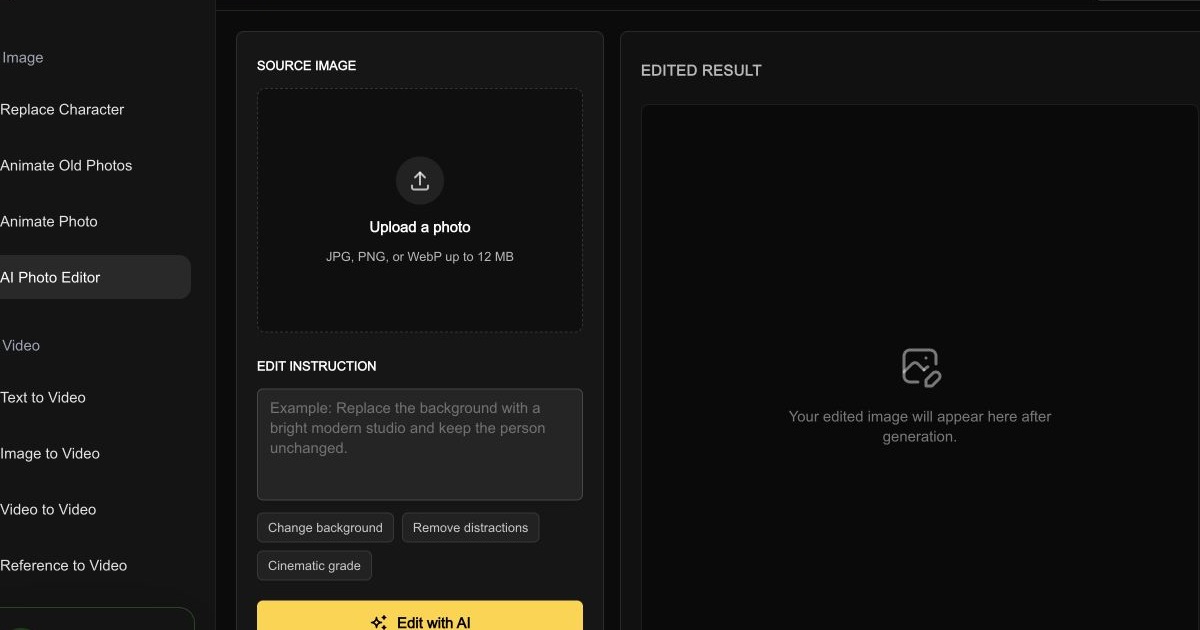
This comparison is research-based. It uses OpenAI's model cards and prompting guide, plus two public preference boards retrieved on September 14, 2026. It does not claim a timed bake-off of our own. If you already edit stills in the AI photo editor, pick the image model for the job, then animate only the frame you keep.
Key Takeaways
- Flare (
gpt-image-2.5-flare) is OpenAI's fastest everyday model and the documented default for most apps. - Sunburst (
gpt-image-2.5-sunburst) is the quality and editing-precision model, with longer generation times. - Published token rates match. Faster is not automatically cheaper.
- Arena.ai currently ranks Sunburst higher; Artificial Analysis currently ranks Flare (max) slightly higher. Treat boards as snapshots, not a permanent winner.
- Start with Flare when GPT Image 2 already looks good enough. Start with Sunburst only when Image 2 failed the quality bar.
GPT Image 2.5 Flare vs Sunburst at a glance
| Category | Flare | Sunburst |
|---|---|---|
| Best for | Iteration, social, volume, product UX | Final campaign stills and precise multi-turn edits |
| OpenAI role | Small model, speed-first, default | Base model, quality-first |
| API IDs | gpt-image-2.5-flare / gpt-image-2.5-flare-2026-09-08 | gpt-image-2.5-sunburst / gpt-image-2.5-sunburst-2026-09-08 |
| Quality knobs | auto, low, medium, high, xhigh, max | Same list |
| Latency vs GPT Image 2 | Up to 50% lower, per OpenAI | Longer generations by design |
| Token rates | $5 / $8 / $30 per 1M text in, image in, image out | Same published rates |
| Rate limits | Same image-per-minute caps by API tier | Same caps |
| Our verdict | Use first | Switch in when an edit or final still fails Flare |
Bold cells mark the practical winner for that row. There is no single winner for every brief.
What OpenAI actually split on September 8, 2026
OpenAI shipped ChatGPT Images 2.5 in ChatGPT, ChatGPT Work, and Codex, then exposed two developer models instead of one "2.5" ID. There is no documented gpt-image-2.5 catch-all. You pick Flare or Sunburst by name (image generation guide, retrieved September 14, 2026).
The product pitch is speed plus control. OpenAI says Images 2.5 cuts generation latency by up to 50% versus Images 2.0, with stronger subject preservation and more reliable multi-turn edits (Introducing ChatGPT Images 2.5). On the API side, that 50% figure is attached to Flare versus GPT Image 2, not to Flare versus Sunburst. Do not paste "50% faster" into a Flare vs Sunburst headline. That comparison is against the previous generation.
The launch post and the prompting guide do not say the same thing about Flare's quality. Launch copy, as quoted in coverage of the September 8 announcement, positions Flare as higher quality than GPT Image 2 at 50% lower latency (9to5Mac, September 8, 2026). The prompting guide instead calls Flare quality comparable to GPT Image 2, and Sunburst higher than GPT Image 2 (Image prompting, retrieved September 14, 2026). Keep both sentences. Do not flatten them into "Flare is always better than Image 2."
OpenAI's launch video is the cleanest public walkthrough of Images 2.5 in ChatGPT. Flare and Sunburst are documented as API model IDs. OpenAI has not published a ChatGPT control that lets you pick one or the other.
Which GPT Image 2.5 model is faster?
Flare wins on speed. OpenAI labels it "Very fast" and "our fastest model for high-quality, everyday image generation" (GPT-Image-2.5 Flare, retrieved September 14, 2026). Sunburst is documented as the longer-running option for detailed creative work.
That is a positioning statement, not a stopwatch. OpenAI tells developers to measure response time on their own prompts, references, sizes, and quality settings, because a speed gain on one workload does not prove a fixed gain on another (Image prompting). If a third-party post quotes a 30-second versus 35-second median, treat it as that lab's batch, not as OpenAI's SLA.
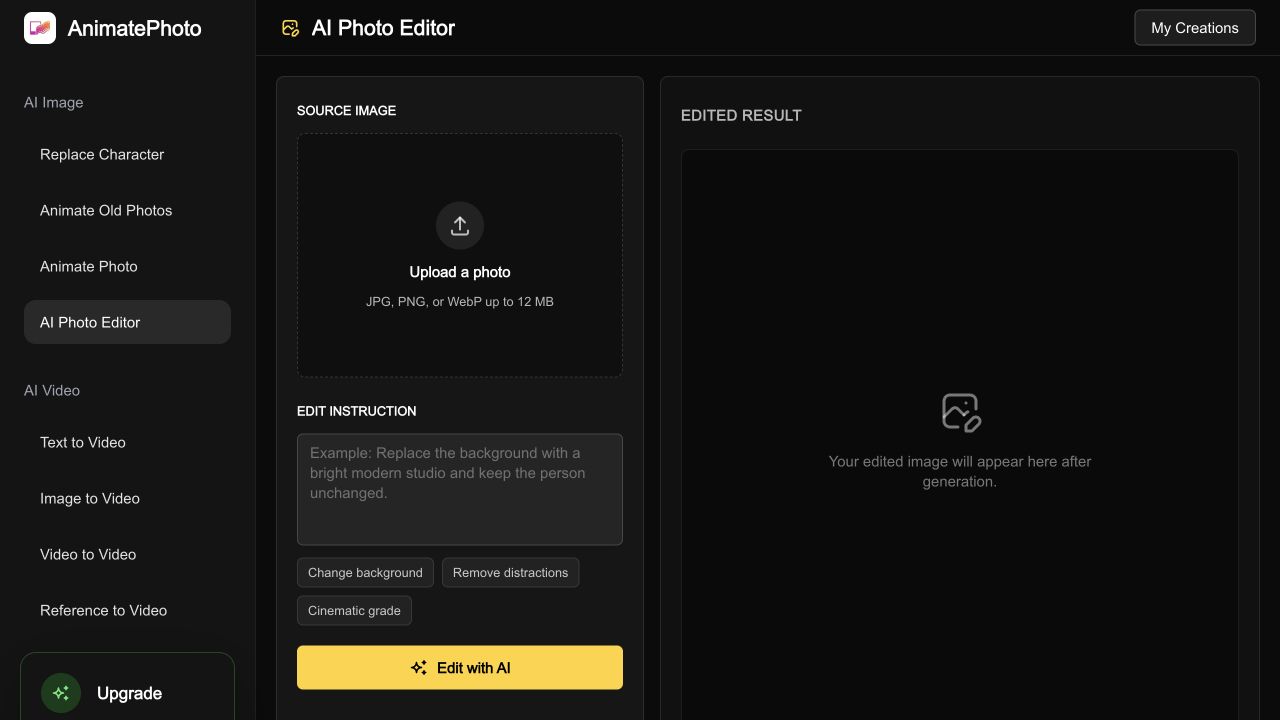
Use Flare when the cost of waiting is higher than the cost of one extra retry: mood boards, catalog variations, social crops, in-app generation, and the first ten directions of a campaign. Keep quality, size, and references fixed when you A/B the two models. Changing max on Sunburst while leaving Flare on medium is not a model test.
Verdict: Flare is the latency winner, with the official 50% claim aimed at GPT Image 2, not at Sunburst.
Which model is more precise for edits?
Sunburst wins when the job is a hard edit, not a pretty first frame. OpenAI tells developers to choose Sunburst "for workflows where editing precision matters most" and to use Flare for fast everyday generation (image generation guide). Launch materials point Sunburst at production-ready campaign creative and polished product imagery, with longer generation times (Introducing ChatGPT Images 2.5).
Both models generate and edit. Flare is not a draft-only toy, and Sunburst is not the only editor. The distinction is which model you keep after the first pass fails: identity drift, wrong label, moved product geometry, or a transparent edge that falls apart.
OpenAI's own migration checklist is the useful part. Save a baseline of difficult edits, exact text, faces, product geometry, and transparent assets. Compare instruction following, identity preservation, unwanted changes, and the full edit sequence, not one cherry-picked still (Image prompting). If a region must stay pixel-identical, composite the approved patch back onto the original. Prompting alone is not a pixel lock.
After the still is approved, a separate motion model should carry it. That is the handoff into image to video, not a reason to regenerate the hero on Sunburst forever.
Verdict: Sunburst is the precision model. Flare still edits; it just is not the model OpenAI asks you to trust on the hardest revisions.
Why Arena.ai and Artificial Analysis disagree
Two public boards, retrieved the same day, do not name the same winner. That disagreement is more useful than a fake "Sunburst always looks better" line.
On Arena.ai (retrieved September 14, 2026), gpt-image-2.5-sunburst led text-to-image at 1421 ± 13 Elo and image edit at 1520 ± 9. Flare sat second at 1399 ± 13 and 1491 ± 9. GPT Image 2 (medium) sat third at 1381 ± 4 and 1461 ± 3. Those 2.5 intervals are wider than Image 2's, which is what you expect from a newer, less-voted snapshot.
Artificial Analysis ranks the max checkpoints, not the unnamed defaults. On September 14, 2026, GPT Image 2.5 Flare (max) led text-to-image at Elo 1187 (5,236 samples, 95% CI ±11). Sunburst (max) was 1179 (5,159 samples, ±11). GPT Image 2 (high) was 1171 (15,419 samples, ±9). The Flare and Sunburst intervals overlap. That is a tie with a Flare-shaped lean at max, not a knockout.
The boards disagree because they are not scoring the same thing. Arena's snapshot puts unnamed Flare and Sunburst checkpoints against Image 2 at medium. Artificial Analysis is scoring max against high, with overlapping confidence intervals. A buyer who reads only one leaderboard will pick the wrong default.
Pew's June 9-15, 2025 American Trends Panel (n = 5,023 U.S. adults) found that 76% say it is extremely or very important to tell whether pictures, videos, and text were made by AI, while 53% are not confident they can tell (Pew Research Center, September 17, 2025). Preference Elo does not measure that trust problem. If you ship commercial stills, run your own acceptance checks for text, faces, and provenance, then read OpenAI's Images 2.5 system card for SynthID and C2PA notes.
Verdict: use boards to sanity-check a shortlist. Do not let either board replace a prompt-matched test on your assets.
Do Flare and Sunburst cost the same?
The published rates match. The invoice might not. Both model pages list $5.00 per million text-input tokens ($1.25 cached), $8.00 per million image-input tokens ($2.00 cached), and $30.00 per million image-output tokens. Text output is not billed because these models return images (Flare and Sunburst model pages, retrieved September 14, 2026). The image generation guide repeats the same table and warns that equal rates do not mean equal cost per image, because token consumption can differ by model and quality (GPT Image 2.5 costs).
OpenAI's built-in estimator currently shows 196 image-output tokens for a 1024×1024 low image on either 2.5 model, or about $0.00588 of image-output cost at $30 per million tokens. That figure excludes text input, image input, and retries. OpenAI also states that the GPT Image 2 calculator does not estimate GPT Image 2.5 token use. Do not copy Image 2 per-image quotes onto 2.5.
Rate limits match too. Neither model is on the free tier. Tier 1 allows 5 images per minute; Tier 5 allows 250 (Flare rate limits). If you generate volume, Flare's latency advantage is also a throughput advantage under the same IPM cap.
Hosted credit prices on this site are a different meter. See credit and plan pricing only when you are converting API cost into product credits.
Verdict: same list price per token; measure usage on accepted images before you call either model cheaper.
How should you migrate from GPT Image 2?
OpenAI's documented path is: keep the prompt, keep the references, keep the size, then change one variable.
- If GPT Image 2 already passes your quality bar, test Flare first and look for a latency win.
- If GPT Image 2 fails a complex case, test Sunburst first and prove quality.
- If Sunburst passes, try the same brief on Flare. Switch to Flare only when quality stays acceptable.
- Tune
qualityafter the model choice.xhighandmaxare for unmet quality needs inside a latency budget, not a default. - Roll out by workflow, keep the previous model for rollback, and read real
usage(Image prompting).

Shared request settings include quality (auto by default), size (auto or WIDTHxHEIGHT), and background (auto, opaque, or transparent). Documented size rules: each edge ≤ 3,840 px, both edges multiples of 16, aspect ratio no wider than 3:1, total pixels between 655,360 and 8,294,400. Outputs above 3,686,400 pixels (2560×1440) are experimental (Image prompting).
McKinsey's latest State of AI survey found 88% of respondents say their organizations regularly use AI in at least one function, while only about one-third have begun to scale it (The State of AI: Global Survey 2025). A two-model image stack that nobody measures is still a pilot. Put Flare and Sunburst on the same scorecard: accepted-image rate, p50/p95 latency, retries, and cost per accepted still.
Older GPT Image 1 and 1.5 IDs are on a shutdown clock (October 23, 2026 and December 1, 2026). Do not copy their parameters onto 2.5 unchanged.
Who should choose Flare, and who should choose Sunburst?
If you need many directions today, choose Flare. If one approved still has to survive a close crop and three revision rounds, choose Sunburst.
Social and catalog teams. Flare. You will throw most frames away. Waiting on Sunburst for every variation taxes the same $30/1M output rate and the same IPM cap.
Performance marketers locking a hero. Sunburst, after Flare has already found the composition. Then send that still into motion instead of hoping the image model also invents a camera move.
Ecommerce ops changing one SKU detail. Sunburst, because "change only the cap color" is the job OpenAI assigned it. If you are combining multiple references first, the AI image combiner is the prep step; the 2.5 model is the render step.
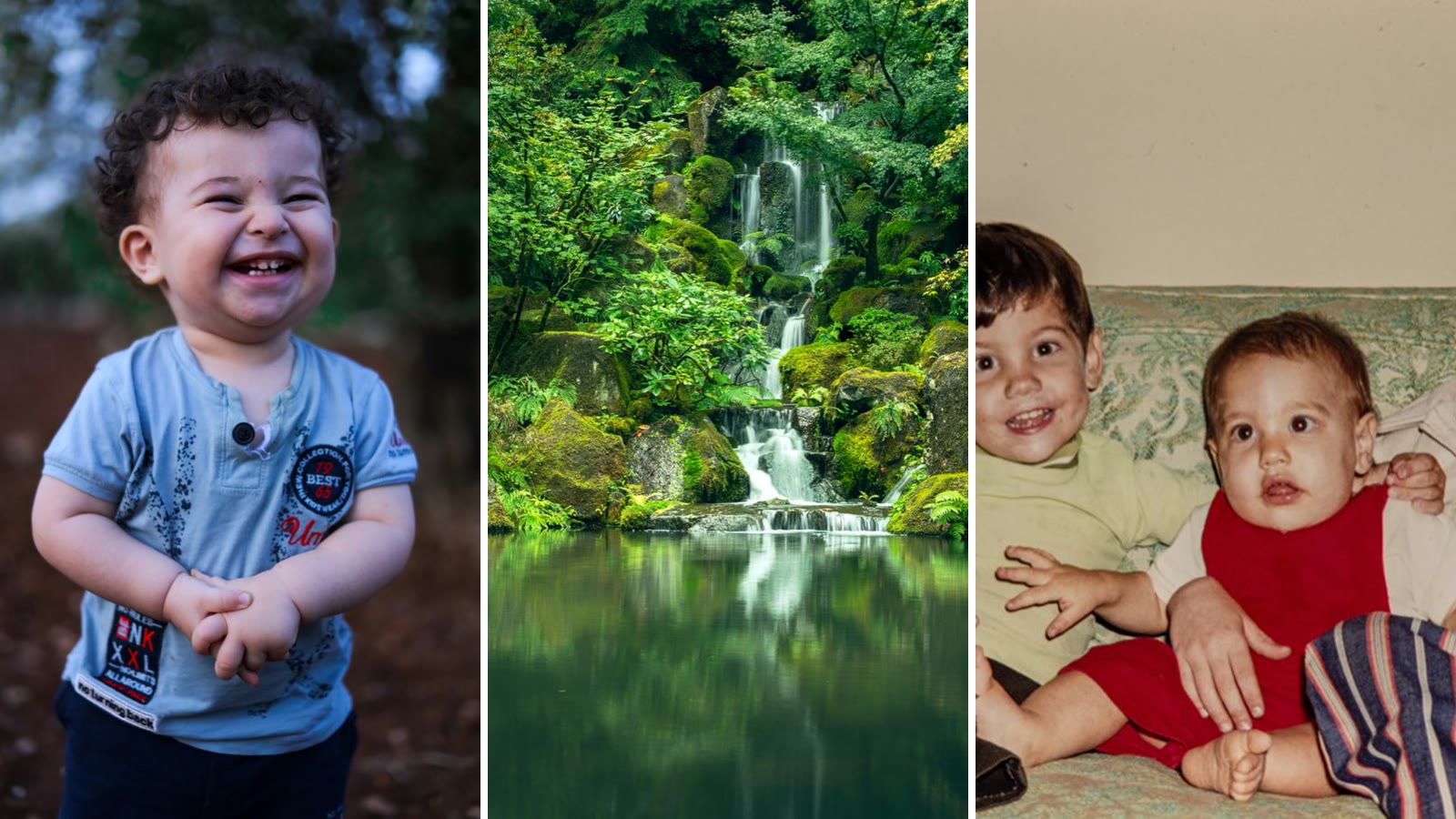
Family photo restoration. Start with old photo animation, not on Sunburst by default. Restoration is an input-quality problem. Scan quality and motion strength are covered in the step-by-step old photo animation guide.
Developers with a working GPT Image 2 integration. Flare first. Sunburst only on the routes where Image 2 already loses.
If neither model fits (you need a driving video, not a still), skip this comparison and use the 2026 image-to-video tool shortlist.
Try the still in the editor, then animate only the frame you would actually publish.
Frequently asked questions
Is GPT Image 2.5 Sunburst always higher quality than Flare?
No. OpenAI says Sunburst is the quality-optimized base model and Flare is quality-comparable to GPT Image 2 while faster. Independent boards split: Arena.ai currently prefers Sunburst; Artificial Analysis currently prefers Flare at max, with overlapping confidence intervals. Quality also moves when you change quality, size, and references. Compare matched settings.
Does Flare cost less than Sunburst?
Not on the published token list. Both are $5 / $8 / $30 per million text-in, image-in, and image-out tokens. Flare can still be cheaper per accepted image if it uses fewer output tokens or needs fewer retries. Sunburst can be cheaper per accepted image if it prevents a failed edit. Read usage. The GPT Image 2 calculator is not a 2.5 calculator.
Can I use Flare and Sunburst together?
Yes, and that is the production pattern OpenAI describes. Explore on Flare. When a frame is close, continue the edit sequence on Sunburst with the previous output as input. Restate what must not change. Then hand the approved still to a video model if you need motion.
What model ID should I pin in production?
Use gpt-image-2.5-flare or gpt-image-2.5-sunburst for the moving alias, or pin gpt-image-2.5-flare-2026-09-08 and gpt-image-2.5-sunburst-2026-09-08 if you need a snapshot. There is no documented generic gpt-image-2.5 ID.
Can I switch Flare and Sunburst inside ChatGPT?
Not in any control OpenAI has documented. ChatGPT Images 2.5 is the consumer product. gpt-image-2.5-flare and gpt-image-2.5-sunburst are the API IDs. Claims that the chat app "is just Flare" are unverified. If you need a named variant, set model in the Image API or the Responses image-generation tool.
Is GPT Image 2 still worth using in 2026?
Yes, as a baseline and as a rollback. OpenAI's migration guide assumes you might keep it while you validate 2.5. It is no longer the model OpenAI tells new apps to start with. If Image 2 already clears your bar, Flare is the first upgrade to time.
Verdict: same price list, two jobs
| Category | Winner |
|---|---|
| Latency / volume | Flare |
| Hard edits / final stills | Sunburst |
| Published token rates | Tie |
| Arena.ai (this snapshot) | Sunburst |
| Artificial Analysis T2I max (this snapshot) | Flare, overlapping CI |
| Default for new work | Flare |
| Overall | Flare for most jobs; Sunburst when precision is the job |
Choose Flare when you would rather see ten options than wait for one. Choose Sunburst when a failed local edit is more expensive than a slower request. Confirm current rates on the model pages before you forecast spend, because token pages change.
The next useful page is not another vs article. It is the still you keep, then the motion pass on photo to video.
Author

More Posts

How to Animate a Picture
Learn how to animate a picture in Canva, Adobe Express, or an AI photo animator. Compare methods, then turn a still image into a short video.
Top 7 AI Image-to-Video Tools You Must Try in 2026
A practical shortlist of image-to-video generators—what each is best for, what to watch out for, and how to pick fast.
How to Make Your Ancestors Smile Using AI (Step-by-Step)
A practical guide to animate old photos into natural, shareable videos—without uncanny artifacts.
Newsletter
Join the community
Subscribe to our newsletter for the latest news and updates